Mulching a Raised Bed: What to Use and How Thick
As an Amazon Associate I earn from qualifying purchases. Prices and availability are accurate as of the date/time indicated and are subject to change.
🔍 How this guide was put together (Editorial Standards)
This guide compares options using published manufacturer specifications, patterns in publicly visible owner reviews, and reputable expert sources. We do not operate a physical testing lab; see our how-we-research page for details.
EDITOR'S PICKS
Top Picks

📑 Table of contents
Mulching isn’t optional in a raised bed — it’s the difference between watering every day in a heatwave and watering every three, and between fighting weeds constantly and pulling one or two a week. It also stops the topsoil from crusting over in summer sun, which quietly starves your plants of air and water even when the surface looks fine. Here’s what to use, how thick, and the couple of things that make it go wrong.
What mulch actually does
- Slows evaporation. Bare soil in a raised bed loses water fast because the sides are exposed. A 2–3 inch mulch layer reduces surface evaporation dramatically.
- Blocks weed seeds from germinating. Most weed seeds need light — mulch is the shade.
- Moderates soil temperature. Cooler in summer, warmer in cold snaps.
- Feeds the soil as it breaks down. Organic mulches decompose into the top layer over a season, so you’re slow-composting in place.
What to use (and how thick)
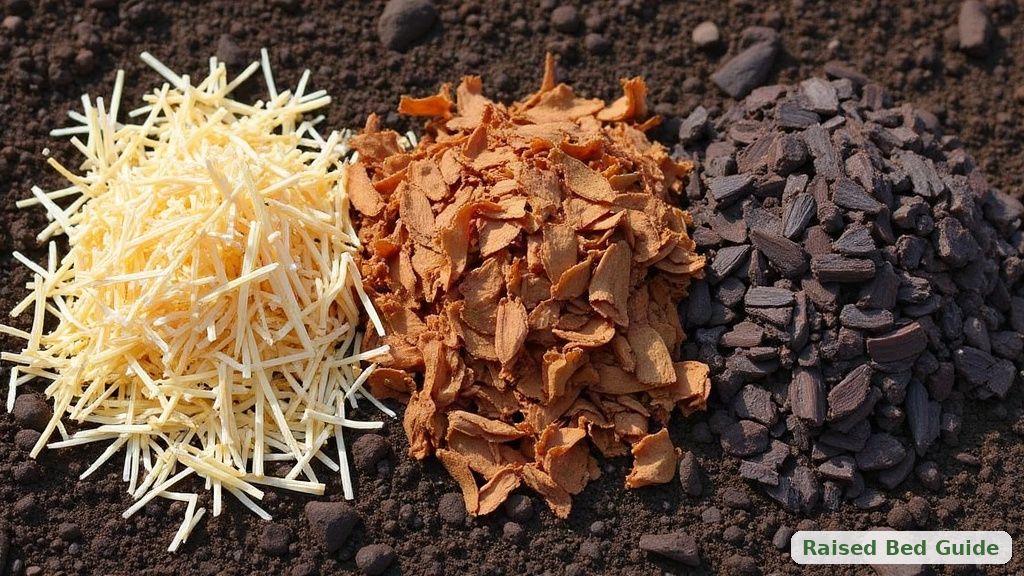
| Mulch | Best for | Thickness |
|---|---|---|
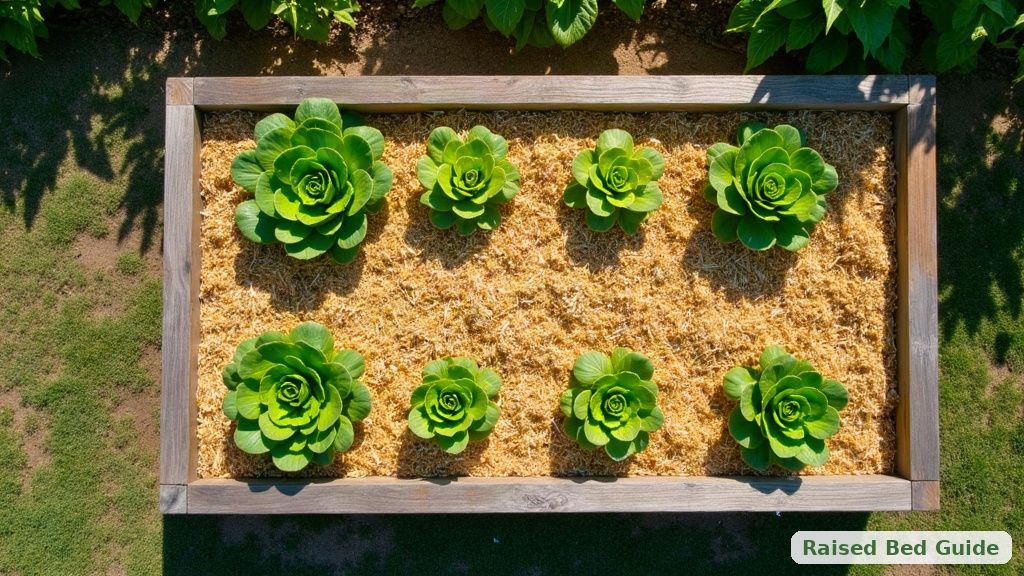
| Straw (not hay) | Vegetables, most annuals | 2–3 in |
| Shredded leaves | Free, general use | 2–3 in |
| Wood chips / bark | Perennials, paths (NOT annual veg) | 2–3 in |
| Grass clippings (dry, thin) | Vegetables (in thin layers) | 1 in max |
| Compost as mulch | Fertile + covering combined | 1–2 in |
Skip:
- Hay — full of seeds, will grow you a grass jungle.
- Fresh grass clippings piled thick — mat down, go slimy, then anaerobic.
- Peat moss — repels water once dry, hard to re-wet.
- Dyed rubber “mulch” — doesn’t break down, no soil benefit, aesthetic only.
The two rules that trip people up
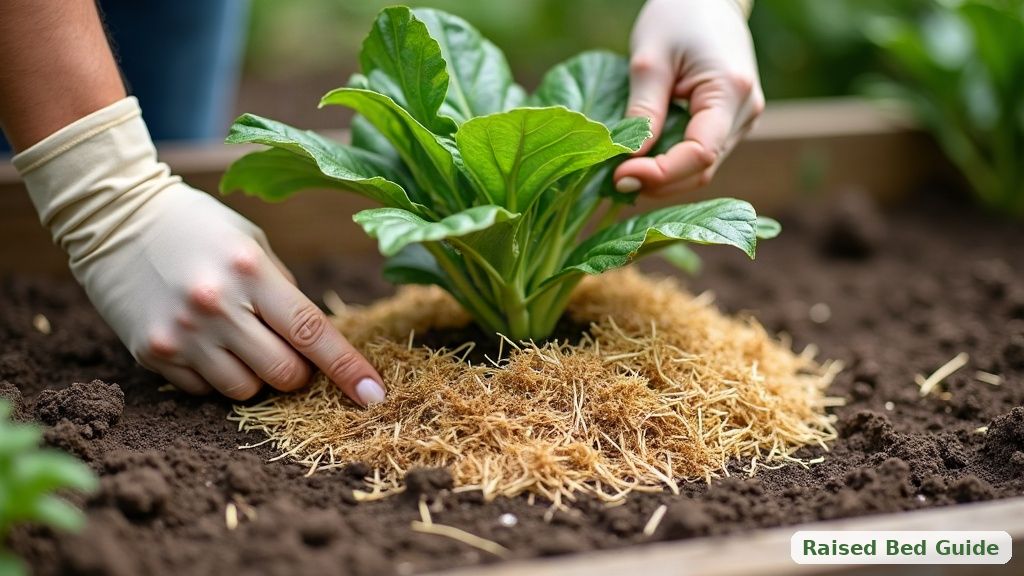
Rule 1: Don’t touch the stems. Keep mulch an inch or two away from the base of each plant. Piled directly against a stem, mulch stays damp and invites rot (“mulch volcano” is the classic tree-killer version). A doughnut shape, not a mound.
Rule 2: Wood chips lock up nitrogen if mixed into the soil. Wood mulch on the surface is fine — as it decomposes, that nitrogen effect stays at the surface. Only when it’s mixed into the root zone (which happens if you till it in accidentally) does it starve your veggies of nitrogen. Keep wood mulch on top, don’t dig it in.
Do I mulch before or after planting?
After. Plant your seedlings and let them settle for a day, then apply mulch around them — that way you’re not fishing mulch out of tiny plant holes or burying seedlings.
When do I refresh mulch?
Once the layer has thinned to about an inch, or when the mulch has largely broken down into the soil (usually late in the season). Add another 1–2 inches on top; you don’t have to remove the old layer.
Fits with the rest of the bed
Mulch is one leg of the water/soil system — pair it with a good soil mix underneath and a smart watering schedule on top. Deep, loose soil + 2–3 inches of mulch = a bed that shrugs off a hot week.
📚 Related In-Depth Analysis
- Compare findings with our guide on How Much Soil For A Raised Bed.
- Compare findings with our guide on Best Vegetables Raised Bed Beginners.
📚 Related In-Depth Analysis
- Compare findings with our guide on How To Water A Raised Garden Bed.
- Compare findings with our guide on Best Metal Raised Garden Beds.
🔧 Interactive Planning Tool
Need exact measurements for your setup? Use our Raised Bed Soil Volume & Mel’s Mix Estimator to Calculate cubic yards of soil and component ratios for your garden beds.
The bottom line
Mulch a raised bed with 2–3 inches of straw or shredded leaves for veggies, wood chips for perennials — kept an inch or two off every stem. Skip hay, thick fresh clippings, and peat. Refresh when it thins. Do this and you’ll water less, weed less, and your soil will quietly get better every season. It’s the highest-value 10 minutes of raised-bed maintenance you’ll do all year.