Raised Bed Watering System: Drip, Soaker, or Sprinkler? (2026)
As an Amazon Associate I earn from qualifying purchases. Prices and availability are accurate as of the date/time indicated and are subject to change.
🔍 How this guide was put together (Editorial Standards)
This guide compares options using published manufacturer specifications, patterns in publicly visible owner reviews, and reputable expert sources. We do not operate a physical testing lab; see our how-we-research page for details.
EDITOR'S PICKS
Top Picks

Watering a raised bed by hand works for one bed and a summer of good weather. Add a second bed, a heatwave, or a weekend away, and it starts to fail — inconsistent moisture leads to blossom end rot on tomatoes, cracked carrots, and lettuces that bolt the first hot week. A proper watering system turns “did I remember today?” into a solved problem, and it doesn’t have to be expensive. The three practical options — drip, soaker hose, and micro-sprinkler — all beat hand-watering, but they solve different problems.
The three systems, honestly compared
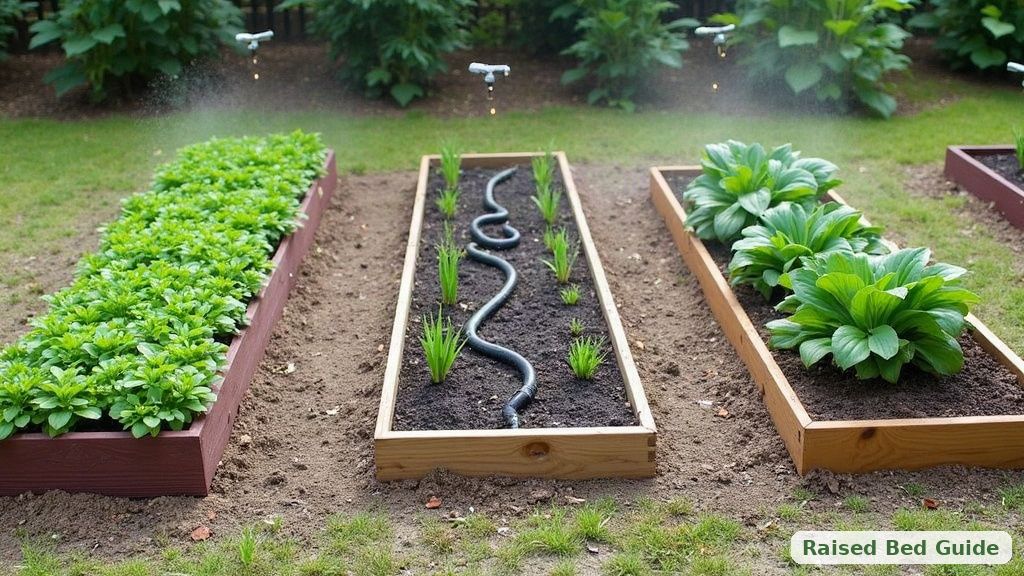
| System | How it works | Water efficiency | Setup effort | Best for |
|---|---|---|---|---|
| Drip (emitters) | Small emitters release water in drops at each plant | Highest (90%+) | Medium (plan emitter spacing) | Tomatoes, peppers, anything with wide spacing |
| Soaker hose | Porous hose "weeps" along its length | High (85%) | Low (lay it, done) | Dense rows of small plants: greens, carrots |
| Micro-sprinkler | Small overhead spray heads | Medium (60–70%, evaporation) | Low | Seed germination, lawn-like coverage |
| Hand-water | Watering can / wand | Depends on you (50–85%) | Zero setup, daily labor | One small bed, hobbyist |
The three system types can all be automated with a battery hose timer ($15–30) — the single upgrade that removes the “did I water?” problem entirely.
Why drip almost always beats soaker on efficiency
Both put water at soil level (no evaporation from spray). But drip places water at each plant’s root zone and skips the empty space between plants — a soaker hose wets everything it passes over. On a bed with big-plant spacing (tomatoes 18” apart), drip uses about 40% less water for the same soil moisture. On a bed of tight-planted greens or carrots, that gap disappears and soaker is actually easier.
Why not just use a normal sprinkler?
Overhead water is fine for grass, wrong for vegetables:
- Wet leaves promote fungal diseases (powdery mildew, blight) — vegetables want water on soil, not foliage.
- Half the spray evaporates before it lands in hot weather.
- It waters weeds in the paths as much as the crops.
Micro-sprinklers (small, low-throw heads) are the exception, useful when starting seeds because they wet the surface gently for germination. Once seedlings are up, switch to drip or soaker.
The DIY vs kit question
A drip kit for one 4×8 bed costs $30–60 (tubing, emitters, pressure regulator, filter, timer). Building it from parts costs $20 and takes an hour. Both work — kits are packaged for common bed sizes and skip the parts-list overwhelm. Skip anything that doesn’t include a pressure regulator (household water pressure blows emitters off) and a filter (dirty water clogs emitters — you’ll be pulling them off to clean them).
For where the water even goes in the bed, our drainage guide covers why soggy beds waterlog roots and how to avoid it, and our soil mix basics matters because loose soil holds water evenly. A perfect system on compacted soil still won’t perform.
How much water does a raised bed actually need?
Rough guidance: 1–1.5 inches of water per week, more in a heatwave. On a 4×8 bed (32 sq ft) that’s about 20–30 gallons/week. Spread across daily short cycles (say 10 minutes a day at half a gallon/minute × ~4–6 emitters) rather than one soaking. Deep, frequent-enough beats shallow-daily for root depth. Our watering guide covers timing (early morning is best), and layout affects distribution too — see our bed layout guide.
Setup order that works
- Pick the system based on what’s in the bed (drip for big spacing, soaker for dense rows, both if you mix).
- Add a hose timer at the tap — set it once, forget for the season.
- Include pressure regulator + filter at the head of the drip line.
- Run the system once with soil moist, watch for leaks and dry spots.
- Adjust emitter spacing in week 2 based on where plants look best/worst.
Skip installing at the peak of summer — start in spring before it gets hot, so you can tune the system while stakes are low.
📚 Related In-Depth Analysis
- Compare findings with our guide on Raised Bed Mulching Guide.
- Compare findings with our guide on Raised Bed Garden Layout Spacing.
📚 Related In-Depth Analysis
- Compare findings with our guide on How To Stop Burrowing Pests In Raised Garden Beds.
- Compare findings with our guide on Raised Bed Vs In Ground Gardening.
🔧 Interactive Planning Tool
Need exact measurements for your setup? Use our Raised Bed Soil Volume & Mel’s Mix Estimator to Calculate cubic yards of soil and component ratios for your garden beds.
The bottom line
For a raised bed, drip is efficient and precise; soaker is dead simple for dense rows; micro-sprinkler is for germination only. All three beat hand-watering, and adding a battery hose timer is the upgrade that actually gets the water on. Include a pressure regulator + filter in any drip setup and you’ll get years of maintenance-free use. Water at the root zone, in the morning, deeply — everything else is polish.